
Wedding Dress Cleaning London: Bridal Alteration, Couture Care, and Heirloom Preservation
Bridal and couture garment care spans three stages that most cleaners treat as one: the alteration before the event, the cleaning after it, and the preservation that determines whether the dress survives the next thirty years.
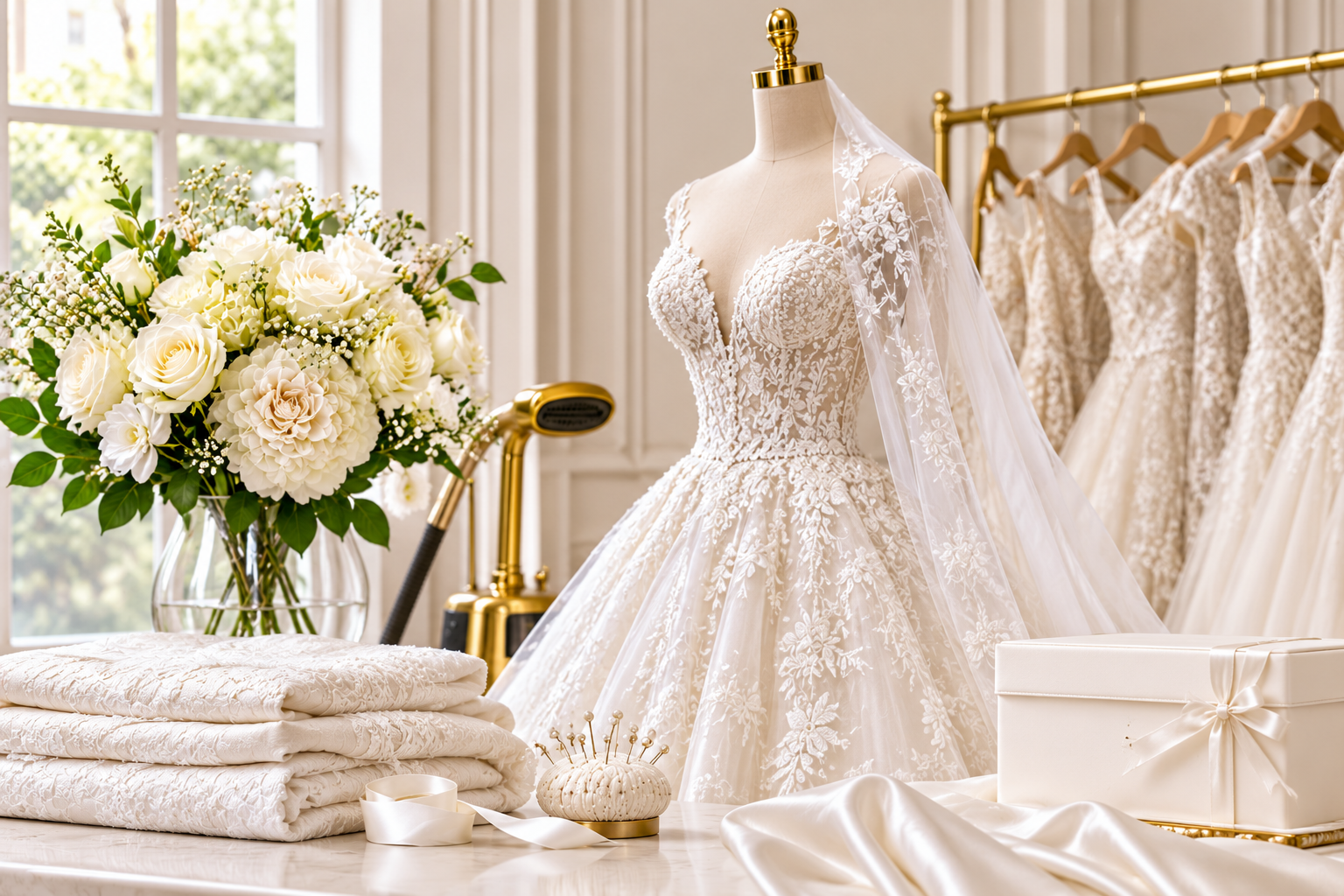
A wedding dress is the most complex garment most people will ever own. Multiple fabrics such as silk, tulle, organza, satin, lace are layered, stitched, boned, and embellished in combinations that vary enormously between designers. The construction is designed for one day of wear, not for repeated cleaning. Every stage — from precise wedding dress alterations before the ceremony to specialist wedding dress cleaning London services, wedding dress dry cleaning, and long-term wedding dress preservation — requires an understanding of how these materials behave individually and together. This guide covers the full lifecycle: alteration, cleaning, couture care, and preservation.
01Why bridal and couture garments need specialist care
A wedding dress is not one fabric. It is a construction. A bodice may combine a silk satin outer with a boned corset structure, a tulle overlay, and hand-sewn beadwork. The skirt may layer organza over duchess satin with a lace hem. Each fabric has a different shrinkage rate, a different tolerance for heat, and a different reaction to cleaning solvents.
Standard dry cleaning with perchloroethylene treats the dress as one garment and applies one cycle. The solvent that cleans the satin may loosen the beading adhesive. The agitation that shifts soil from the tulle may distort the organza. The temperature that suits the lace may shrink the lining. Specialist bridal care assesses every component before selecting a method, and treats the dress as the multi-material construction it is.
02Pre-wedding alterations: what to expect and when to start
Most wedding dresses require alteration. Off-the-rack gowns are manufactured to standard sizing. Designer and couture gowns are closer to the bride’s measurements but still need fine-tuning to fit the body precisely.
Common bridal alterations
- Bodice adjustments. Taking in or letting out the seams to match the waist, bust, and rib cage. Boned bodices require the boning to be repositioned when the fabric is moved.
- Hem length. Set to the shoe height the bride will wear. A gown hemmed for flats will drag in heels. A gown hemmed for heels will sit too high in flats. Bring the wedding shoes to the fitting.
- Bustle construction. The mechanism that lifts and pins the train for the reception. French bustles, American bustles, and over-bustles each distribute the weight differently. The bustle is not a standard attachment — it is built to the specific train length and fabric weight.
- Strap and sleeve adjustments. Shortening, narrowing, adding, or removing straps or sleeves to match the neckline to the bride’s shoulder line and posture.
- Lining adjustments. Adding a modesty panel, shortening the lining to reduce weight, or replacing a synthetic lining with a breathable alternative for comfort during a long day.
When to start
Begin alterations eight to twelve weeks before the wedding. Three fittings is typical: the first to mark the changes, the second to check the adjustments, and the third for final confirmation with shoes and undergarments. Leaving alterations to the last month creates pressure that increases the risk of errors and eliminates the margin for corrections.
03Post-wedding cleaning: the 48-hour window
A wedding dress worn for a full day accumulates perspiration, makeup, food, wine, grass, and dirt in areas the bride never notices during the event. The longer these stains sit, the deeper they bond to the fabric. Perspiration reacts with silk and produces yellowing that becomes permanent if untreated. Wine tannins oxidise and set. Makeup oils penetrate layered fabric and spread.
The ideal window for post-wedding cleaning is within 48 hours. A dress cleaned within two weeks of the wedding will almost always produce a better result than one cleaned two months later. If the dress cannot be brought in immediately, store it loosely in a breathable garment bag — not in plastic, which traps moisture and accelerates yellowing. Do not attempt to spot-clean stains at home.
04How specialist wedding dress cleaning works
Working with specialist wedding dress cleaners London brides rely on ensures every gown that enters the BLANC Bridal Studio is individually inspected before wedding dress cleaning begins. The fabrics, the embellishments, the boning, the construction, and every stain are documented.
Stains are mapped by type — perspiration, makeup, wine, food, grass, mud — because each requires a different pre-treatment. A wine stain and a foundation stain on the same dress receive different chemistry before the cleaning cycle begins.
Unlike standard wedding dress dry cleaning London options that rely on harsh solvents, each gown is cleaned by hand or using specialist equipment matched to the most delicate component — using liquid CO₂ or biodegradable wet cleaning, with no perchloroethylene at any stage. Beadwork, sequins, lace appliques, and hand-sewn details are assessed for adhesive type and attachment method. Areas at risk of damage are protected or treated separately.
After cleaning, the gown is steamed, shaped, and finished by hand on a form that supports the structure. Machine pressing is never used on bridal gowns.
05Couture garments beyond bridal: evening gowns and occasion wear
The same principles that apply to wedding dresses apply to couture evening gowns, red carpet pieces, and structured occasion wear. These garments share the same challenges: multiple fabrics, embellishment, complex construction, and a value that makes incorrect cleaning a costly mistake.
A couture evening gown cleaned with PERC may survive one or two cycles. By the third or fourth, the solvent has begun to dull the silk, loosen the beadwork adhesive, and flatten the fabric’s natural drape. Specialist cleaning assesses the gown in the same way a bridal gown is assessed, per component, per fabric, per embellishment and selects the method accordingly.
At BLANC, couture and evening wear is handled at the Atelier with the same individual assessment process as bridal. Pricing is quoted after inspection because the work varies as significantly between a simple silk column dress and a heavily embellished ball gown as it does between wedding dresses.
06Heirloom preservation: storing a dress for decades
Proper wedding dress preservation is the process that follows cleaning. The purpose is to prevent the three causes of long-term fabric degradation: oxidation, acid migration, and moisture retention.
After cleaning, the gown is wrapped in acid-free tissue paper. The tissue prevents fabric layers from touching each other, which avoids dye transfer and pressure marks over years of storage. The wrapped gown is placed in an acid-free box — standard cardboard and standard tissue paper contain acids that migrate into fabric over time, causing yellowing and brittleness.
The box is sealed and stored in a controlled environment: cool, dry, dark, and away from heat sources. Under these conditions, a preserved wedding dress can be stored for twenty years or more without visible deterioration. The fabric retains its colour, its structure, and its drape. The gown remains wearable.
Without preservation, a clean dress stored in a standard wardrobe bag yellows within two to five years. The plastic traps moisture. The acid in standard tissue migrates into the fabric. Light exposure through clear bags accelerates colour change. Without preservation, the dress is a memory. With it, the dress is an heirloom.
07Repairs and restoration of vintage and inherited gowns
A wedding dress passed down from a mother or grandmother may need restoration before it can be worn again. Fabric may have yellowed in storage. Lace may have torn. Beadwork may have loosened. Seams may have weakened. The dress may need both structural repair and cleaning before it is wearable.
Restoration begins with an assessment of what is original and what has been altered previously. The goal is to bring the dress back to a wearable condition while respecting the original construction. A vintage silk gown with hand-finished seams should not be repaired with machine stitching. The repair method should match the garment’s era and technique.
At BLANC, vintage bridal restoration is handled at the Chelsea Bridal Studio and the Atelier. The assessment includes a cleaning test on a hidden area to confirm how the aged fabric responds before any full cleaning begins. Pricing is quoted after inspection.
08The Bridal Studio at Chelsea
BLANC’s specialist Bridal Studio is at the Chelsea location, 85 Lower Sloane Street, SW1W 8DA. Pre-wedding alterations, post-wedding cleaning, couture care, and acid-free preservation are all handled under the same roof.
Bridal alterations are conducted by specialist tailors experienced in working with multi-fabric, boned, and embellished constructions. Fittings are by appointment. Three fittings is standard: mark, check, and confirm.
For brides outside the Chelsea area, BLANC offers complimentary collection across London on orders over £30 through our wider dry cleaning London delivery network. The gown is collected from your address, cleaned and preserved at the Atelier, and returned in its acid-free storage box. Contact info@blancliving.co or call 020 8004 2630.
How much does wedding dress cleaning cost in London?
Pricing is quoted individually after inspecting the gown. The cost depends on the fabrics, the construction, the embellishment, and the staining. No fixed price range is published because the work varies too significantly between dresses. Contact BLANC at 020 8004 2630 for a consultation.
How soon after the wedding should the dress be cleaned?
As soon as possible. The ideal window is within 48 hours. Stains oxidise over time and become progressively harder to remove. Perspiration causes yellowing on silk that becomes permanent if left untreated. Two weeks is good. Two months is acceptable. Six months risks permanent staining.
What is wedding dress preservation?
Preservation follows cleaning. The gown is wrapped in acid-free tissue, placed in an acid-free box, and stored under conditions that prevent yellowing, oxidation, and fabric degradation. A preserved dress can last twenty years or more without visible deterioration — wearable by a daughter, niece, or anyone who fits the gown.
Does BLANC do bridal alterations?
Yes. The Chelsea Bridal Studio at 85 Lower Sloane Street (SW1W 8DA) handles all bridal alterations: bodice adjustments, hem length, bustle construction, strap and sleeve changes, and lining modifications. Three fittings is standard. Begin eight to twelve weeks before the wedding.
Can a vintage wedding dress be restored?
In most cases, yes. Restoration begins with assessing the fabric condition, the construction, and any previous alterations. A cleaning test on a hidden area confirms how the aged fabric responds. Repairs match the original era and technique. Pricing is quoted after inspection at the Chelsea Bridal Studio.
Send it to us. It comes back clean, reshaped and ready to wear.
Enter your postcode to book a collection. Standard turnaround is 48 to 72 hours, and collection and delivery are free on orders over £30.
Four London studios: Marylebone, Notting Hill, Chelsea and South Kensington.More from the atelier.
The Guide to Eco-Friendly Dry Cleaning London
The majority of dry cleaners in London and across the UK use perchloroethylene (PERC) as their primary cleaning solvent. PERC is classified…
Read the article →
Luxury Fabric & Cashmere Sweater Care Guide London | BLANC
A cashmere sweater care guide that recommends hand washing in cool water is not wrong for cashmere. It is wrong for leather,…
Read the article →
10 Habits That Make Clothes Last Longer
The case for doing so is practical and environmental. WRAP's research found that extending the life of clothing by an extra nine…
Read the article →Your wardrobe is in good hands.
Enter your postcode. Pay only after inspection.
Or call 020 8004 2630