
Luxury Fabric & Cashmere Sweater Care Guide London | BLANC
Fabric care for silk, cashmere, leather, and velvet requires four different approaches — because each material responds to heat, moisture, chemicals, and mechanical stress in fundamentally different ways.
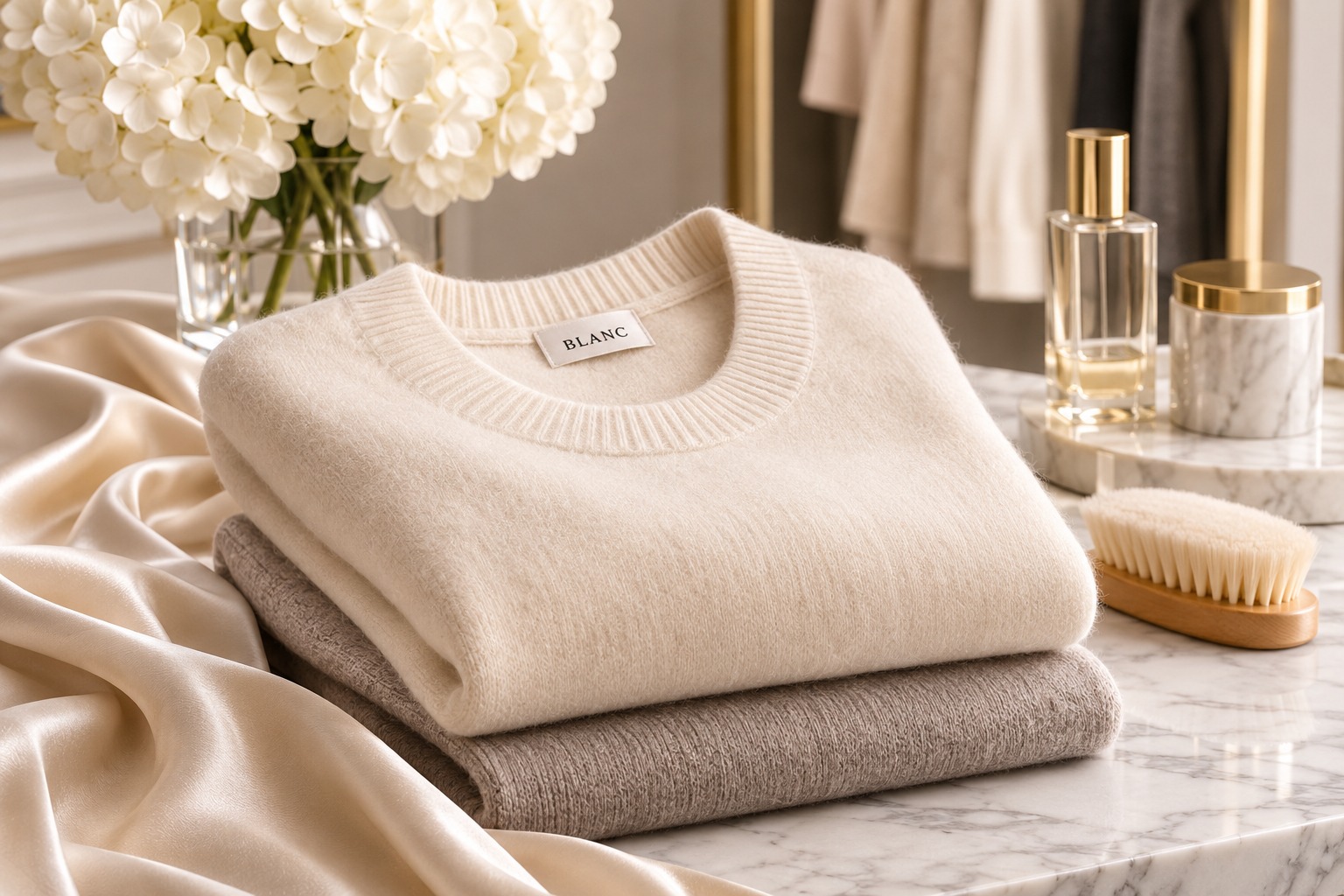
A cashmere sweater care guide that recommends hand washing in cool water is not wrong for cashmere. It is wrong for leather, which water damages on contact. A method that cleans silk safely may crush velvet’s pile permanently. A solvent that works on woven fabric destroys a treated animal hide. Luxury fabric preservation is not one method applied carefully. It is the right method applied to the right material — and the consequences of choosing the wrong one are rarely reversible.
01Why luxury fabrics need separate care
The difference between luxury and standard fabrics is not just price. It is the material’s sensitivity to the cleaning process. Cotton tolerates hot water, machine agitation, and tumble drying. Silk does not. Polyester resists most solvents. Leather is destroyed by them. Cashmere survives gentle handling and collapses under rough treatment. Velvet retains its pile under steaming and loses it permanently under pressing.
A dry cleaner that batch-processes all garments through the same cycle treats these materials identically. The cotton survives. The silk dulls. The cashmere pills. The leather stiffens. The velvet flattens. Each material was damaged by the same process for the same reason: no individual assessment before cleaning began.
02Silk: the fibre that loses its defining quality first
Silk’s characteristic sheen comes from fibroin — a protein fibre with a triangular, prism-like cross-section that refracts light. This structure is what makes silk look like silk. It is also the first thing to degrade under the wrong cleaning method.
Perchloroethylene is aggressive on fibroin. Repeated exposure roughens the fibre surface and dulls the lustre that the triangular structure creates. A silk blouse cleaned with PERC three or four times loses its sheen permanently. The fabric still looks like silk from a distance. Up close, the surface is flat and matte where it was once luminous.
Alkaline detergents — the kind found in most domestic washing liquids — attack silk for a different reason. Silk is a protein fibre, and alkaline environments denature proteins. A silk scarf washed at home in standard detergent may shrink, stiffen, and lose its drape in a single cycle.
How to preserve silk
Professional wet cleaning with pH-neutral, biodegradable detergents at controlled temperatures (as low as 15 degrees) preserves the fibroin structure and the sheen. Liquid CO₂ cleaning is equally safe because CO₂ is chemically inert with respect to protein fibres. At BLANC, the method is selected per garment. A silk blouse, a silk-lined jacket, and a silk evening dress from the same client may each receive a different approach.
At home: mastering the daily care for silk means storing garments on padded hangers away from direct sunlight (UV degrades silk faster than most fabrics). Do not iron silk at high temperatures. Steam instead, holding the steamer six inches from the fabric. Do not spray perfume directly onto silk — the alcohol in fragrance stains protein fibres permanently.
03Cashmere: softness that survives or softness that disappears
Cashmere is finer than standard wool — the fibres are thinner, softer, and more vulnerable to mechanical damage. The softness that defines cashmere is the first property lost when the garment is cleaned incorrectly.
Machine washing at high temperatures or with excessive agitation causes cashmere to felt. Felting is irreversible — the fibres lock together, the fabric stiffens, and the garment shrinks. A cashmere sweater that felts in the wash is not damaged. It is destroyed.
PERC does not cause felting, but it strips the natural oils that keep cashmere fibres supple. Over repeated cleans, the fabric feels drier, coarser, and thinner. The owner attributes this to wear. It is cleaning damage.
How to preserve cashmere
Professional wet cleaning at low temperatures with minimal agitation preserves the softness and the oil content. Liquid CO₂ is the alternative for cashmere garments with oil-based stains. Between professional cleans, cashmere should be folded (never hung — hangers stretch the shoulders), stored in breathable containers with natural moth deterrents (cedar, not mothballs), and aired after each wear rather than washed after every use. A cashmere sweater worn in rotation and cleaned every three to four wears will last years. One machine-washed weekly may not survive one season.
04Leather: a material that is not fabric
Leather is a treated animal hide. It is not woven or knitted. It has no thread structure, no fibre weave, and no compatibility with any cleaning method designed for textiles. Standard dry cleaning solvents strip the natural oils that keep leather supple, dissolve the surface finish, and leave the hide dry, brittle, and prone to cracking.
Water is equally damaging to untreated leather. It stains on contact, causes shrinkage, and distorts the shape of garments and accessories permanently. A leather jacket caught in rain and left to dry without treatment will never regain its original form.
How to preserve leather
Professional leather care is a specialized, multi-stage process: assessment of the leather type and finish, surface cleaning with products formulated specifically for hide (not textile solvents), reconditioning to replenish natural oils, colour restoration where needed, and protective finishing. Turnaround for leather items is two to three weeks because the process cannot be compressed without risk.
At home: condition leather twice a year with a product matched to the leather type (smooth, suede, nubuck). Store leather garments on broad-shouldered hangers in breathable covers — never in plastic, which traps moisture and accelerates deterioration. Keep leather away from direct heat and sunlight, both of which dry the hide and cause cracking.
05Velvet: pile, crush marks, and the limits of pressing
Velvet is defined by its pile — the dense upright fibres that create its texture and light-absorbing surface. The pile is also the most fragile element. Pressing velvet with a standard iron flattens the pile permanently. Machine washing agitates and tangles it. Conventional dry cleaning with PERC can stiffen the fibres and dull the surface.
Crush marks on velvet — the lines and flat patches that appear from folding, sitting, or storage — are the most common damage clients bring in. Minor crush marks can be reversed with controlled steaming. Deep or prolonged creasing may be permanent.
How to preserve velvet
Professional cleaning with liquid CO₂ is the safest method for velvet because the process involves minimal mechanical agitation and no heat pressing. After cleaning, the pile is restored using directional steaming that lifts the fibres without flattening them. At BLANC, velvet garments are assessed individually because the base fabric (silk velvet, cotton velvet, synthetic velvet) determines the temperature and method.
At home: hang velvet garments on padded hangers. Never fold velvet for storage — folds create permanent crush lines. Steam gently from the reverse side to lift minor crush marks. Do not iron velvet under any circumstances.
06How professional fabric care and valet collection work together
For wardrobes containing multiple luxury fabrics, scheduling premium dry cleaning London collection services removes the logistical burden of matching each individual garment to the right specialist cleaner. BLANC collects from your London address, assesses every piece individually at the Atelier, selects the cleaning method per fabric, and returns everything hand-finished to your door.
Complimentary collection and delivery on orders over £30. Recurring weekly or twice-weekly collections are available for clients who maintain luxury wardrobes in regular rotation. The driver handles the transport. The Atelier handles the assessment. The garments receive the care each fabric requires without the owner managing the process.
07Common mistakes that damage luxury fabrics at home
- Storing cashmere on hangers. The weight stretches the shoulders. Fold and stack instead.
- Ironing velvet. Any direct heat contact flattens the pile permanently. Steam from the reverse side only.
- Spraying perfume on silk. Alcohol-based fragrances stain protein fibres. Apply fragrance to skin or hair, not to silk garments.
- Using standard detergent on any luxury fabric. Alkaline detergents denature silk proteins, strip cashmere oils, and damage leather finishes. pH-neutral, biodegradable detergents are the safe alternative.
- Storing leather in plastic. Plastic traps moisture and accelerates deterioration. Use breathable garment bags only.
08Fabric preservation at BLANC
BLANC has cleaned luxury fabrics without perchloroethylene since 2011. The method is selected per garment: liquid CO₂ for oil-based soil on delicate fibres, biodegradable wet cleaning for water-based stains and general maintenance, and specialist leather care for hides that no textile method can safely touch. All finishing is done by hand.
Four studios across London: Chelsea (SW1W 8DA), Marylebone (W1U 8AQ), South Kensington (SW7 3EX), and Notting Hill (W11 2DF). Schedule at blancliving.co or call 020 8004 2630.
How should I care for a cashmere sweater?
Fold and store flat (never on a hanger). Clean every three to four wears, not after every use. Professional wet cleaning at low temperatures preserves the softness. Avoid machine washing, which causes irreversible felting. Use natural moth deterrents such as cedar during storage.
Can silk be dry cleaned safely?
Yes — with the right method. PERC damages silk’s fibroin structure and dulls the sheen. Liquid CO₂ and wet cleaning with pH-neutral detergents are both safe. At BLANC, the method is selected per silk garment based on the fabric weight, construction, and stain type.
How is leather cleaned professionally?
Specialist leather cleaning involves assessment, surface cleaning with hide-specific products (not textile solvents), oil reconditioning, colour restoration, and surface finishing. Turnaround is two to three weeks. Standard dry cleaning solvents and water both damage leather.
Can crushed velvet be restored?
Minor crush marks can be reversed with controlled steaming. Deep or prolonged creasing may be permanent. Professional cleaning with liquid CO₂ preserves the pile because the process involves minimal agitation and no heat pressing. Never iron velvet.
Does BLANC collect luxury garments from my address?
Yes. Complimentary collection and delivery across London on orders over £30. Every garment is individually assessed at the Atelier and cleaned using the method matched to its specific fabric. Schedule at blancliving.co or call 020 8004 2630.
Send it to us. It comes back clean, reshaped and ready to wear.
Enter your postcode to book a collection. Standard turnaround is 48 to 72 hours, and collection and delivery are free on orders over £30.
Four London studios: Marylebone, Notting Hill, Chelsea and South Kensington.More from the atelier.

Wedding Dress Cleaning London: Bridal Alteration, Couture Care, and Heirloom Preservation
A wedding dress is the most complex garment most people will ever own. Multiple fabrics such as silk, tulle, organza, satin, lace…
Read the article →
The Guide to Eco-Friendly Dry Cleaning London
The majority of dry cleaners in London and across the UK use perchloroethylene (PERC) as their primary cleaning solvent. PERC is classified…
Read the article →
10 Habits That Make Clothes Last Longer
The case for doing so is practical and environmental. WRAP's research found that extending the life of clothing by an extra nine…
Read the article →Your wardrobe is in good hands.
Enter your postcode. Pay only after inspection.
Or call 020 8004 2630