
Press-Only vs Full Clean
Press only vs full clean is a decision that comes up whenever a garment looks creased and has also been worn. A press-only service removes creases and restores shape with heat, steam and pressure. A full clean removes sweat, oils and marks first, then presses the garment to finish. Choosing the wrong one means either paying for a step the garment does not need or sealing dirt under a crisp finish.
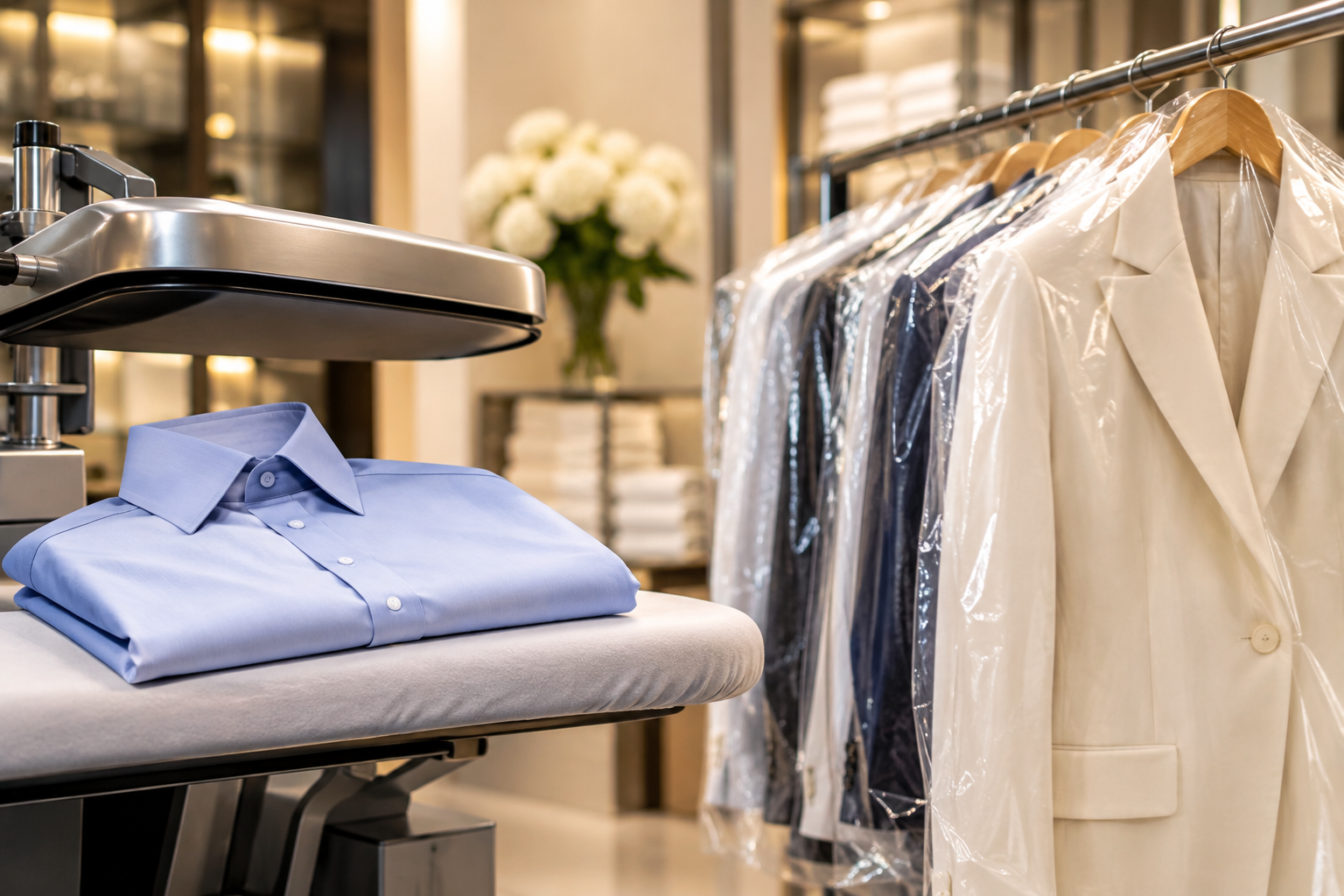
This guide explains what each one does and does not do, when each is the right choice, and how a clean and press works in practice, so that you can decide what a shirt, suit or dress needs before it goes anywhere near an iron.
What does a press-only service do?
Pressing is a finishing step. It uses heat, steam and pressure to remove creases and to set a garment’s shape, which changes how a garment looks and not what it contains. A pressed shirt looks smooth. It still carries whatever was in the fabric before the iron touched it, including sweat, body oils and any faint marks.
The tool matters less than the way it is used. A hand iron gives control on shaped pieces. A flat press, a machine that closes a heated plate over the garment, is quick and even on simple, flat items but tends to flatten structured ones. Machine pressing flattens a garment, and hand finishing shapes it.
What does a full clean do?
A full clean is a removal process, followed by a finish. Each garment is inspected, and any marks are treated first. The garment is then cleaned by the method its fibre calls for. At BLANC that is wet cleaning with biodegradable detergents, which suits water-soluble soil such as perspiration, or liquid CO₂, which dissolves grease at low temperature without water and is recaptured and reused.
Pressing and hand finishing come last. That is the key point of this comparison: a full clean includes the press, and a press does not include a clean.
At a glance: what each service does
| Press only | Full clean | |
| What it does | Removes creases and sets shape with heat, steam and pressure | Removes sweat, oils and marks, then presses and shapes the garment |
| What it does not do | Remove sweat, oils, stains or odour | Replace repairs or alterations |
| Best for | Garments that are already clean and have creased in storage or travel | Garments worn for hours, or marked, or smelling of wear, or going into storage |
When is press only enough?
Press only is enough when the garment is already clean and needs reshaping. The usual cases are a shirt that was laundered but not ironed, a clean suit that has creased in a suitcase, and a dress that was cleaned before storage and has crushed in the wardrobe. In each case there is nothing in the cloth to remove.
Tailoring is a special case. Tailors advise cleaning suits sparingly and relying on brushing, airing and rest between wears, so a lightly worn jacket may only need a press to refresh its line. The test is how long the garment was worn, and whether it carries any smell or mark. If it does, press only is not the right route.
When is a full clean needed?
A full clean is needed whenever wear has left something behind. Look for these signs:
- A visible mark that does not lift, however faint.
- A smell that remains after airing.
- Perspiration marks at the collar, cuffs or underarms.
- A long day or evening of wear, particularly in a shirt or any garment worn against the skin.
- Storage ahead. Clean cloth is less attractive to moth larvae, and sweat left in the fabric can mark it over time.
Never press over a stain. Heat can set a mark, which turns a stain that could have been removed into a permanent one. Pressing a worn garment also gives it a sharp finish that hides the problem until it shows up later.
How to do clean and press properly
People often ask how to do clean and press and usually want one thing: a garment that is clean and looks sharp. The order is what matters. Clean first, press last, and never the other way round. Professional dry cleaning follows that order for every garment.
The clean press technique used by a specialist has four stages, and the first is choosing the right cleaning method for the cloth:
- Inspect. Check the fibre, the construction, the care label and every mark.
- Treat marks first. Heat sets a stain, so marks are pre-treated before cleaning and before any press.
- Clean by the right method. The fibre decides, not a default cycle.
- Finish by hand. Press in sections, steaming where direct contact would harm the cloth, then hang or fold the garment as it should be.
Both halves can be done at home for simple garments. A clean cotton shirt can be washed and pressed with care. The cleaning step is where home methods fall short on anything else: a home wash cannot match the controlled temperature, agitation and detergent that wool, silk or tailoring need, and an iron cannot shape a lapel the way hand finishing does. For anything tailored, delicate or valuable, a specialist protects the cloth.
Hand pressing or machine pressing?
For a shirt, the everyday version of this routine is a clean press the shirt is laundered, then pressed, with the collar and cuffs given their own attention. At BLANC the shirt service launders and presses each shirt, presses collars and cuffs by hand, and returns it hung or board-folded. Anyone who wears shirts through a working week will want regular clean presses to keep that routine going.
Tailored pieces need more. A flat press can flatten a lapel and crease a shoulder, while hand finishing keeps the lapel rolled, the shoulder curved and the cloth free of shine. That is why every dry-cleaned garment at BLANC is pressed and finished by hand, section by section.
A quick decision guide
A few checks settle most press only vs full clean decisions:
- Length of wear. An hour of light wear points to a press. A full day or a long evening points to a clean.
- Smell or marks. Either one means the garment needs cleaning.
- Fabric. Silk, velvet and embellished pieces need care with heat and are best judged by a specialist.
- Storage. If the garment is going away, clean it first.
- Care label. Treat it as a starting point, and read our guide to how to read care labels before assuming the method.
Common mistakes
- Pressing a worn shirt instead of cleaning it. The collar looks sharp, but the sweat is still in the fabric.
- Ironing over a mark. Heat can set it.
- Using a flat press on a tailored jacket. It flattens the lapel and the shoulder.
- Cleaning too often to avoid ironing. Tailored pieces gain from brushing and airing between cleans, so match the service to the wear.
How BLANC approaches it
At BLANC, pressing and hand finishing are the final stage of every clean and not a separate step. A garment is inspected, cleaned by the method that suits it, then shaped by hand and returned hung or folded. The dry cleaning price list shows no separate press-only item, so if a garment only needs refreshing, ask your nearest studio which route suits it.
For everyday laundry that does not need pressing, such as towels, sheets and casual clothes, the wash and fold service washes and folds by weight. Collection and delivery are free across London on orders over £30.
Can I press a garment instead of cleaning it?
Only if it is already clean. Pressing removes creases, not sweat, oils or marks, and heat can set a stain. A garment that has been worn for a full day, or that smells or is marked, needs cleaning first. Lightly worn tailoring can be brushed, aired and refreshed, which is a decision best made by a specialist.
What does clean and press mean at a dry cleaner?
A clean and press is a clean followed by a press. The garment is inspected, cleaned by the method its fibre calls for, then pressed and finished. At BLANC the press is the final stage of every clean, and hand finishing shapes tailored pieces as well as pressing shirts.
Can pressing damage a garment?
Yes, if it is done on the wrong fabric or in the wrong way. Pressing over a stain can set it, and a flat press can flatten the lapel and shoulder of a tailored jacket. Silk and velvet need care with heat and steam. Hand finishing and a method matched to the cloth keep the risk low.
Is steaming the same as pressing?
No. Steaming relaxes creases with moist heat and freshens a garment, while pressing combines heat and pressure to set a crease or a shape. Neither removes sweat, oils or stains, so neither replaces cleaning.
Does BLANC offer a press-only service?
BLANC treats pressing and hand finishing as the final stage of every clean, and the dry cleaning price list shows no separate press-only item. If a garment only needs refreshing, ask your nearest studio which route suits it. Collection and delivery are free across London on orders over £30.
Sources and further reading
BLANC: Dry Cleaning (service page)
BLANC: Shirt Laundry (service page)
BLANC: Wash and Fold Laundry Service
BLANC: How to Read Care Labels
Send it to us. It comes back clean, reshaped and ready to wear.
Enter your postcode to book a collection. Standard turnaround is 48 to 72 hours, and collection and delivery are free on orders over £30.
Four London studios: Marylebone, Notting Hill, Chelsea and South Kensington.More from the atelier.

10 Habits That Make Clothes Last Longer
The case for doing so is practical and environmental. WRAP's research found that extending the life of clothing by an extra nine…
Read the article →
How To Care For Activewear
Well, it is that time of year again, we are all dusting off our gym kit after the Christmas period’s overindulgence! Getting…
Read the article →
How To Read Care Labels
According to Fashion Revolution, 70% of clothes we throw away have irreversible damage, such as colour fading, stubborn stains or shrinking. With…
Read the article →Your wardrobe is in good hands.
Enter your postcode. Pay only after inspection.
Or call 020 8004 2630