
When to Book Wedding Dress Cleaning
The right time to book wedding dress cleaning is soon after the wedding, ideally within a few weeks. Most of what a gown picks up on the day cannot be seen at the time. Champagne, cake, perspiration, body oils and perfume dry clear, then change colour quietly in storage. By the time a mark appears, it has usually been in the fabric for months.

This guide explains when to clean a wedding dress, what delay does to the fabric, how cleaning and preservation fit together, and what to do before the gown reaches a specialist.
01When should a wedding dress be cleaned?
A wedding dress should be cleaned soon after the wedding, ideally within a few weeks. Residue that cannot be seen on the day can darken over time, and the longer it stays in the fabric, the harder it is to treat.
The reason is chemical rather than cosmetic. Sugars from champagne and cake, salts and oils from perspiration, and traces of perfume or make-up can all oxidise. Oxidation is the slow reaction with air that turns a clear residue yellow or brown. It often begins within weeks, and a gown that looked clean at the end of the night can show marks months later, usually after it has been boxed and put away.
Cleaning soon does not mean cleaning in a rush. The aim is to have the gown with a specialist while any marks are still fresh, before it goes into long-term storage.
02Why waiting makes wedding dress cleaning harder
A wedding gown is rarely made of one fabric. Silk, lace, tulle and satin sit in layers, often with beadwork or boning, and each reacts differently to time. Three things tend to change as the months pass.
- Residues set. Fresh marks sit on the surface of the fibres. Older ones bond with them and oxidise, so they need more patient treatment, and some will not fully lift. Not every stain can be fully reversed, and a specialist should say so honestly before any work begins.
- Hems collect more than dirt. Grit and pavement dust on the hem and train can be abrasive to fine fibres if left in place.
- Storage can lock problems in. A dress boxed with residue in it has a slow reaction under way, and nobody sees the result until the box is opened, sometimes years later.
A dress can still be cleaned later. The sooner it is assessed, the more options there are.
03A simple timeline for booking wedding dress cleaning
Wedding dress cleaning works best when it is planned like any other part of the wedding.
- Before the wedding. Decide who will take the dress to the specialist, and when. BLANC can collect a gown from your London address, so the dress does not have to wait for your return from honeymoon.
- The day after. Hang the gown on a padded hanger that supports the shoulders, or lay it flat on a clean white sheet if it is heavy. Keep it out of direct light and out of any plastic cover.
- Within a few weeks. Book the appointment or the collection. Bridal consultations at BLANC’s Chelsea Bridal Studio are by appointment, so allow time to arrange one.
- After months or years. Book anyway. The dress will be assessed individually, and a specialist can advise on what is realistic. Some older marks may remain visible.
For a vintage or heirloom gown, assessment comes first, because the fabric may be fragile in ways that only an inspection will show.
04How wedding dress cleaning and preservation work together
Cleaning and preservation are two stages of one job, and the order matters. Cleaning removes the residue that would otherwise keep changing in storage. Preservation then protects the clean gown from light, moisture, pressure and acidic materials.
If you are wondering how to preserve your wedding dress, the sequence is straightforward.
- Clean first. Preserving a dress that still carries invisible residue only puts the problem in a box.
- Use acid-free tissue. Ordinary tissue and cards can yellow fabric over time. Acid-free tissue does not.
- Choose a breathable box. It guards against moisture and light. Plastic can trap humidity, which is why it is best avoided.
- Store it somewhere stable. A cool, dark, dry room is better than an attic or a damp cellar, and a box lying flat is better than one standing on its end.
This is the approach behind BLANC’s wedding dress preservation service, where a cleaned gown is returned prepared for long-term storage. Wedding dress cleaning and storage are often arranged together for that reason. A dress that is cleaned but stored badly loses much of the benefit, and a dress that is stored well but never cleaned carries its problems with it.
Done in that order, wedding dress cleaning and preservation leave a gown that can be opened years later. Our article on what actually happens after the big day describes the process in more detail.
05What happens when you book wedding dress cleaning in London
At BLANC, a gown starts with an inspection. The specialist records its condition before any treatment: fabric, construction, beadwork, lace, existing marks and weak points. Nothing is chosen until that is done.
The method follows the inspection. Most gowns are cleaned with wet cleaning using biodegradable detergents. The most delicate or heavily structured gowns may be cleaned with liquid CO₂, which works at low temperature under pressure. In both cases temperature and agitation are set to suit the most fragile element of the dress, so if the beadwork cannot tolerate a setting, that setting is not used, even on the silk it is attached to. Many people search for wedding dress dry cleaning in London. The method that suits a gown depends on the gown, not the name of the service.
After cleaning, the dress is finished by hand. A specialist works section by section, shaping the bodice and settling the skirt layers, rather than applying the same pressure across the whole garment. Both cleaning methods are PERC-free.
Every gown is quoted individually after inspection, because fabric, construction, embellishment and condition vary so much from dress to dress. You can bring the dress to the Chelsea Bridal Studio at 85 Lower Sloane Street, SW1W 8DA, by appointment, or arrange a collection from your London address. The full service is described on our wedding dress cleaning page.
06Between the wedding and the appointment
A few careful habits protect the gown while it waits.
- Hang it properly. Use a padded hanger that supports the weight across the shoulders. A heavy gown with several layers is safer laid flat.
- Keep it breathable. A cotton garment bag is better than plastic, which can trap moisture.
- Keep it out of the light. Sunlight can yellow and weaken fabric.
- Do not treat marks yourself. Home remedies can set a mark, and even water can leave a ring on silk.
- Make a note. Write down what was spilled and where, such as red wine on the left of the bodice.
07The rest of the wedding party
The bride’s dress is not the only garment from the day. Bridesmaid dresses, flower girl dresses and morning suits carry the same invisible residue and respond to the same timing. For guests, our guide to wedding guest outfits and the care that makes them last covers what to do after the event.
If you want alterations at the same time, such as a hem or a bustle, the Chelsea Bridal Studio also handles wedding dress alterations.
08FAQs
Can a wedding dress still be cleaned years after the wedding?
Yes. Older marks can be harder to treat, and some may not fully lift, so the gown is inspected first and a specialist advises on what is realistic before any work begins. Vintage and heirloom gowns are assessed individually in the same way. Bring the dress in as soon as you can, because the options only narrow with time.
Do I need preservation as well as cleaning?
Cleaning removes residue. Preservation prepares the clean gown for long-term storage in acid-free tissue and a breathable box. If you plan to keep the dress for years, both are worth having. If you plan to sell it or alter it for another occasion, cleaning alone may suit better. A consultation can help you decide.
How much does wedding dress cleaning cost?
Every gown is quoted individually after inspection, because fabric, construction, embellishment and condition vary widely between dresses. There is no standard price for a wedding dress. Bring the gown to the Chelsea Bridal Studio by appointment, or arrange a collection from your London address, and the quote follows the inspection.
Can the dress be collected from my home?
Yes. BLANC arranges collections from your London address, which suits couples who are away after the wedding. The gown is inspected and recorded before any work begins, and the cost is confirmed after that inspection, in the same way as for a dress brought to the studio.
Should I clean a dress before the wedding?
A gown that has only been tried on and altered rarely needs cleaning. The exception is a dress that has been stored for a long time, or a vintage or second-hand gown, which should be assessed first. For a new dress, the right moment for cleaning is after it has been worn.
Send it to us. It comes back clean, reshaped and ready to wear.
Enter your postcode to book a collection. Standard turnaround is 48 to 72 hours, and collection and delivery are free on orders over £30.
Four London studios: Marylebone, Notting Hill, Chelsea and South Kensington.More from the atelier.
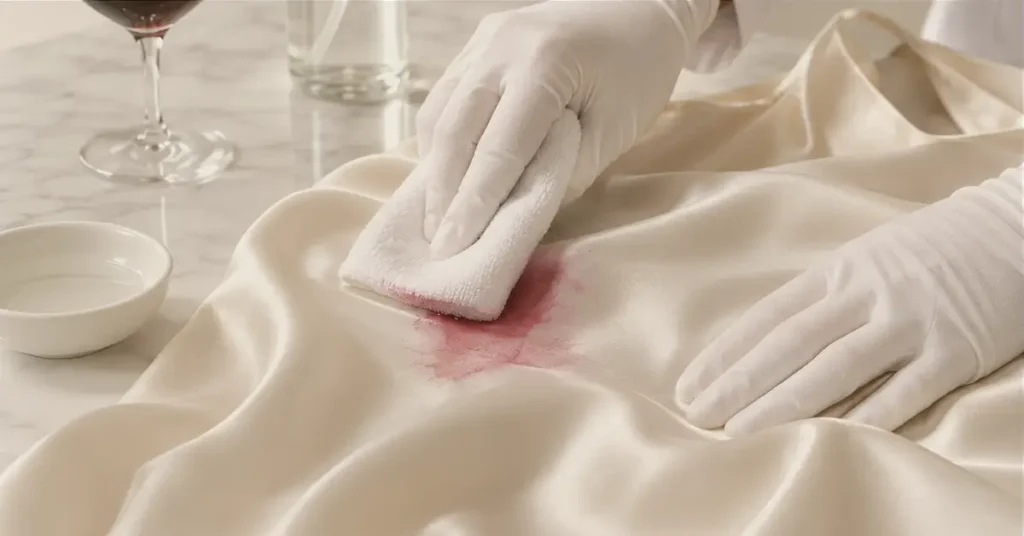
How to Remove Red Wine Stains from Silk Dresses Safely
Red wine contains tannins, anthocyanins (the pigments that give it colour), and acid. On cotton, these compounds sit on the surface of…
Read the article →
5 Signs Your Dry Cleaner Is Using Toxic Solvents
What a dry cleaning solvent is A dry cleaning solvent is a liquid chemical used to clean textiles without water. PERC is…
Read the article →
How To Care For Denim
Denim is one of the most distinctive and versatile fabrics in fashion today and staple clothing pieces like jeans, denim shorts and…
Read the article →Your wardrobe is in good hands.
Enter your postcode. Pay only after inspection.
Or call 020 8004 2630