
How to Remove Red Wine Stains from Silk Dresses Safely
Removing red wine stains from silk requires a different approach than removing them from cotton or polyester — because silk is a protein fibre that reacts badly to most of the remedies that work on other fabrics.
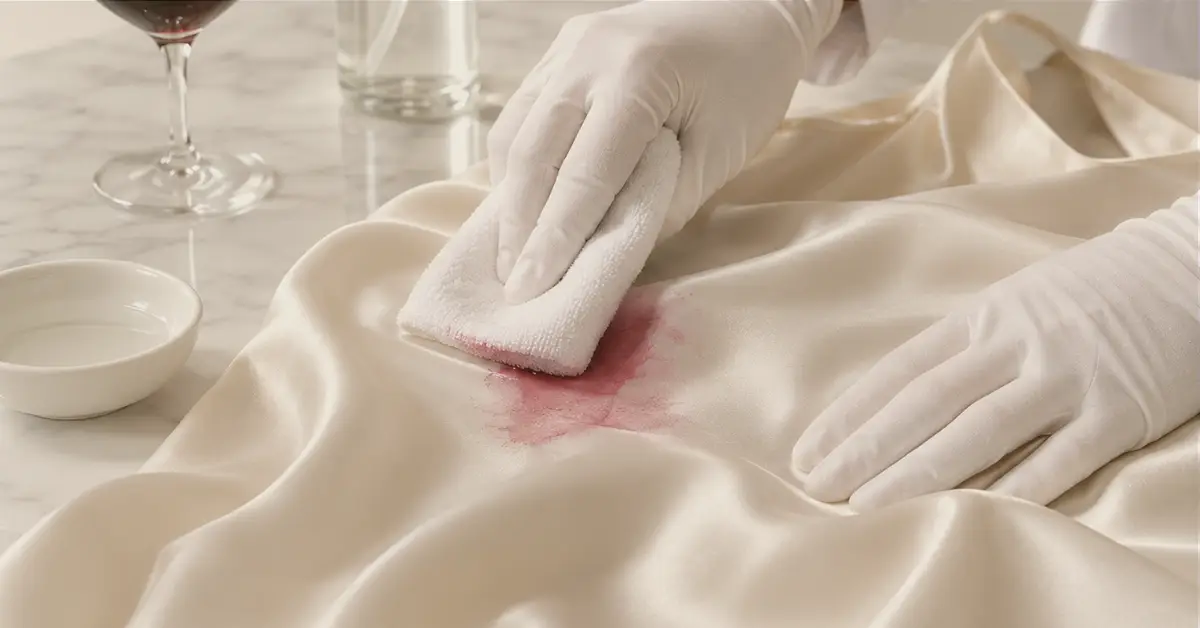
Red wine contains tannins, anthocyanins (the pigments that give it colour), and acid. On cotton, these compounds sit on the surface of a cellulose fibre that tolerates heat, bleach, and aggressive scrubbing. On silk, they penetrate a delicate protein fibre — fibroin — whose triangular cross-section refracts light and creates the fabric’s characteristic sheen. The methods that remove red wine from a cotton tablecloth damage or destroy silk. The stain is the same. The fabric is not. The treatment must match the fabric, not the stain.
01Why red wine on silk is different from red wine on cotton
Cotton is a plant-based cellulose fibre. It is durable, heat-resistant, and tolerates most cleaning agents. A red wine stain on cotton can be flushed with cold water, treated with an oxidising agent, and washed at a moderate temperature without structural risk to the fabric.
Silk is a protein fibre. Proteins denature under alkaline conditions, high heat, and mechanical stress. A silk dress cannot tolerate the same flushing, scrubbing, or chemical treatment that a cotton shirt can. The fibroin structure that gives silk its sheen is the same structure that makes it vulnerable. Cleaning agents that are safe for cellulose are destructive to protein.
02What happens chemically when red wine meets silk
Red wine’s colour comes from anthocyanins — water-soluble pigments found in the grape skin. When these pigments contact silk, they bond to the protein fibre rapidly. The longer they sit, the deeper they penetrate, and the stronger the bond becomes.
Heat accelerates the bonding. A warm stain sets faster than a cold one. Alkaline environments (soap, baking soda, most household detergents) alter the pigment’s chemical structure and can change a removable purple-red stain into a permanent blue-grey mark that no amount of treatment will reverse.
This is why the first sixty seconds matter — and why the wrong reaction in those sixty seconds can make the stain permanent.
03What to do in the first sixty seconds
Blot. Use a clean, dry white cloth or an absorbent paper towel. Press the cloth gently against the stain to absorb as much liquid as possible. Do not rub. Rubbing pushes the wine deeper into the weave and spreads the pigment across a wider area.
Blot from the outside of the stain inward. Working from the centre outward pushes the wine to clean fabric and enlarges the mark.
After blotting, do nothing else. Do not apply water, salt, white wine, club soda, or any household product. Place the dress in a clean breathable bag and bring it to a professional cleaner as soon as possible. The single best outcome for a red wine stain on silk is immediate blotting followed by professional treatment within 24 to 48 hours.
04The home remedies that make red wine stains on silk worse
- Salt. Common household hacks often claim to remove red wine stains from silk, but popular remedies like salt, baking soda, and vinegar usually cause permanent fabric damage instead. Salt is abrasive. On silk, it scratches the fibroin surface, dulling the sheen in the area around the stain. Salt also draws moisture unevenly, creating a ring mark that may be harder to remove than the wine itself.
- White wine. Pouring white wine onto red wine dilutes the pigment but does not remove it. On silk, the additional liquid spreads the stain further into the fabric and the acid in white wine can cause further discolouration on dyed silk.
- Club soda. The carbonation does nothing to break down anthocyanins. The water component risks creating a water mark on silk, which is a separate stain that requires its own treatment.
- Baking soda. Alkaline. Denatures silk protein. Can turn the red pigment into a blue-grey mark that becomes permanent.
- Hydrogen peroxide or bleach. Both oxidise the silk fibre itself, not just the stain. The result is a white or pale patch where the stain was — and permanent structural damage to the fabric.
05Why commercial red wine stain removers fail on silk
Most commercial red wine stain remover products are formulated for cotton and synthetic fabrics. They contain oxidising agents, surfactants, and sometimes alkaline compounds designed to break down tannins on cellulose fibres. These formulations are effective on cotton tablecloths, polyester blouses, and carpet.
On silk, they attack the fibre alongside the stain. The stain may lighten or disappear. The fabric underneath is damaged — roughened, discoloured, or structurally weakened in a way that cannot be reversed. A red wine stain remover that works on cotton is not a red wine stain remover that works on silk. The product does not distinguish between the stain and the fibre. Before attempting any home treatments on washable cottons or linens, consult our comprehensive stain remover guide to avoid setting marks permanently.

06How professional red wine stain removal works
At BLANC, a red wine stain on silk is treated as a multi-step process. The garment is inspected to assess the silk type, the dye stability, the stain penetration, and the time elapsed since the spill. A treatment plan is determined before any product touches the fabric.
To safely remove red wine stains from silk, our specialists pre-treat the garment with pH-neutral spotting agents formulated specifically for protein fibres. These targeted agents break down the anthocyanin pigment bond without denaturing the delicate fibroin structure. The garment is then cleaned using professional wet cleaning at low temperature (as low as 15 degrees) or liquid CO₂, both non-toxic methods that protect the silk structure.
After cleaning, the dress is hand-finished using steam at a controlled distance. No direct iron contact. No heat pressing. The garment is returned with the stain removed and the silk’s sheen intact.
For heavily set or aged stains, the treatment may take longer. The team will confirm the timeline and the likelihood of full removal upon inspection at our studios offering specialized dry cleaning London services.
07Preventing red wine stains on evening wear
A fabric protector spray designed for silk can provide a barrier that slows pigment absorption and gives more time to blot before the stain sets. Apply before wearing, not after the spill. Allow the protector to dry fully before the garment is worn. This does not prevent stains. It buys time.
For events where red wine is likely, wearing a darker colour is the practical precaution. A red wine stain on a black or navy silk dress is invisible, whereas on a cream or white silk dress, it is a crisis. For more tips on preserving formal evening wear before and after major celebrations, read our guide to wedding outfit care.
08FAQs
Can red wine stains be removed from silk?
Yes, in most cases, when treated professionally within 24 to 48 hours of the spill. The key is avoiding home remedies (salt, baking soda, bleach) that damage silk before a professional can assess the stain. Blot immediately with a dry cloth, then bring the garment in.
Does salt remove red wine from silk?
No. Salt is commonly recommended but is one of the worst remedies for silk. It is abrasive, scratches the fibroin surface, dulls the sheen, and creates ring marks from uneven moisture absorption. Blot with a dry cloth and take the garment to a professional cleaner instead.
How quickly should a red wine stain on silk be treated?
As soon as possible. Blot within the first sixty seconds. Bring the garment to a professional within 24 to 48 hours for the best chance of full removal. Stains that sit for days or weeks bond more deeply to the protein fibre and become progressively harder to remove.
Will dry cleaning remove red wine from silk?
Conventional dry cleaning with PERC may lighten the stain but damages the silk fibre in the process. Professional treatment with pH-neutral spotting agents followed by wet cleaning or liquid CO₂ removes the stain without attacking the fabric. The method matters as much as the result.
How much does silk stain removal cost at BLANC?
Pricing depends on the garment, the stain severity, and the time elapsed since the spill. BLANC provides a quote after inspecting the piece. Bring the dress to any studio, or call 020 8004 2630 to arrange a collection
Send it to us. It comes back clean, reshaped and ready to wear.
Enter your postcode to book a collection. Standard turnaround is 48 to 72 hours, and collection and delivery are free on orders over £30.
Four London studios: Marylebone, Notting Hill, Chelsea and South Kensington.More from the atelier.

When to Book Wedding Dress Cleaning
This guide explains when to clean a wedding dress, what delay does to the fabric, how cleaning and preservation fit together, and…
Read the article →
5 Signs Your Dry Cleaner Is Using Toxic Solvents
What a dry cleaning solvent is A dry cleaning solvent is a liquid chemical used to clean textiles without water. PERC is…
Read the article →
How To Care For Denim
Denim is one of the most distinctive and versatile fabrics in fashion today and staple clothing pieces like jeans, denim shorts and…
Read the article →Your wardrobe is in good hands.
Enter your postcode. Pay only after inspection.
Or call 020 8004 2630